
Stamped Concrete Patio Costs on Long Island: Patterns, Prices, and What to Expect
A stamped concrete patio on Long Island costs between $18 and $28 per square foot installed in 2026. For an average 400-square-foot backyard patio, that works out to $7,200 to $11,200 depending on pattern, color, and finish. More complex patterns, multiple colors, and integral borders push the total higher. Simpler single-pattern, single-color pours stay toward the low end.
This guide walks through exactly what you're paying for, which patterns cost what, and the questions that separate a $9,000 patio that lasts 25 years from a $9,000 patio that cracks in four.
What Stamped Concrete Actually Is
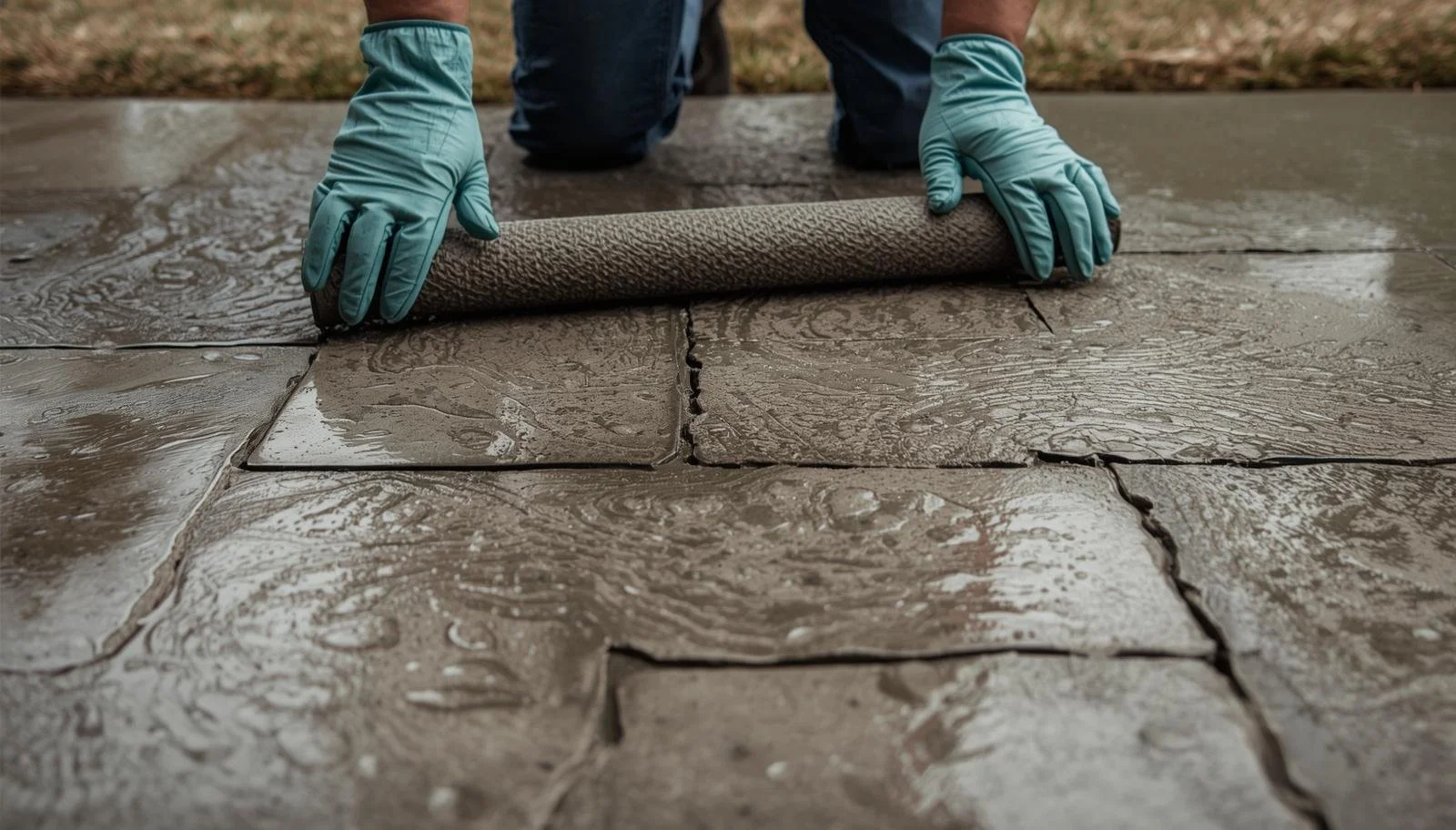
Stamped concrete is standard poured concrete imprinted with rubber mats or rollers while the surface is still workable. The stamps create textures that look like brick, flagstone, slate, cobblestone, or wood plank. The concrete is then stained and sealed to bring out depth and color. The result is a single poured slab that looks like something more expensive than a standard concrete patio.
It's not the same as pavers. Pavers are separate stone pieces set in sand. Stamped concrete is one continuous slab with decorative texture and color. That difference affects both price and maintenance.
2026 Price Breakdown on Long Island
A typical $18 to $28 per sq ft installed price usually includes:
· Subgrade prep and forming
· A 4 to 6-inch concrete pour (4,000 PSI mix, air-entrained for LI climate)
· Rebar or fiber mesh reinforcement
· Stamping with rubber mats
· Color hardener and release agent
· Acid staining or integral color (certain colors will affect the price drastically)
· Cleanup
Not usually included:
· Permit fees (when required)
· Demolition of an existing surface
· Grading or drainage work
· Lighting or built-in features (fire pits, benches, planters)
· Resealing every 2 to 3 years (ongoing $2 to $3 per sq ft)
Popular Patterns and How They Affect Cost
Pattern drives price more than most homeowners expect:
· Ashlar slate — $16 to $20/sq ft. The most common pattern on Long Island. Looks like irregular stone tiles.
· Brick running bond — $17 to $21/sq ft. Simple, clean, traditional.
· Cobblestone — $20 to $24/sq ft. More stamping work per square foot.
· Flagstone (random) — $18 to $22/sq ft. Natural-stone feel, popular in Huntington and Smithtown.
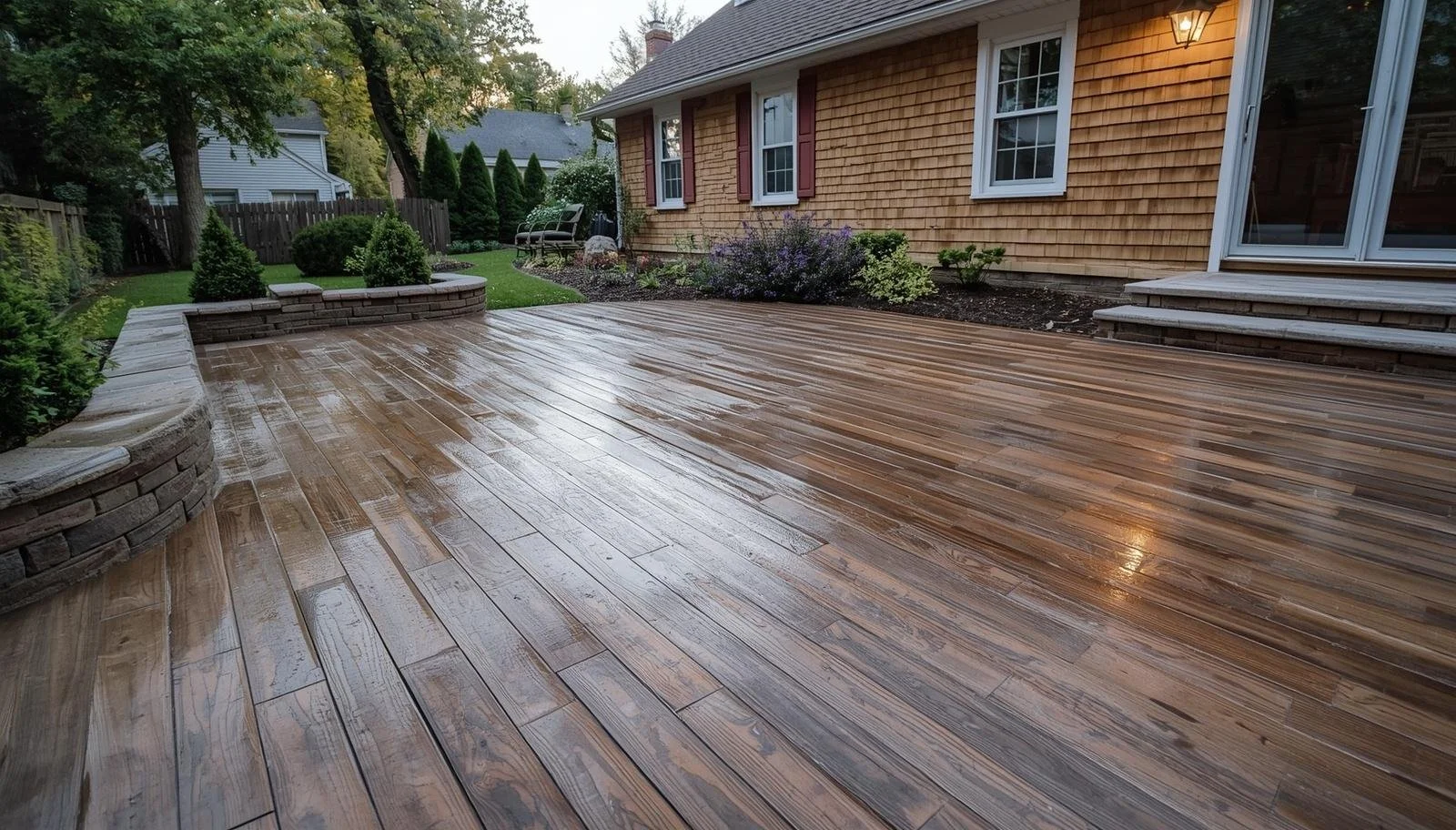
· Wood plank — $26 to $32/sq ft. Labor-intensive because each plank is individually stamped.
· Multi-pattern or inlay designs — $26 to $42/sq ft. Borders, medallions, and mixed textures add materially.
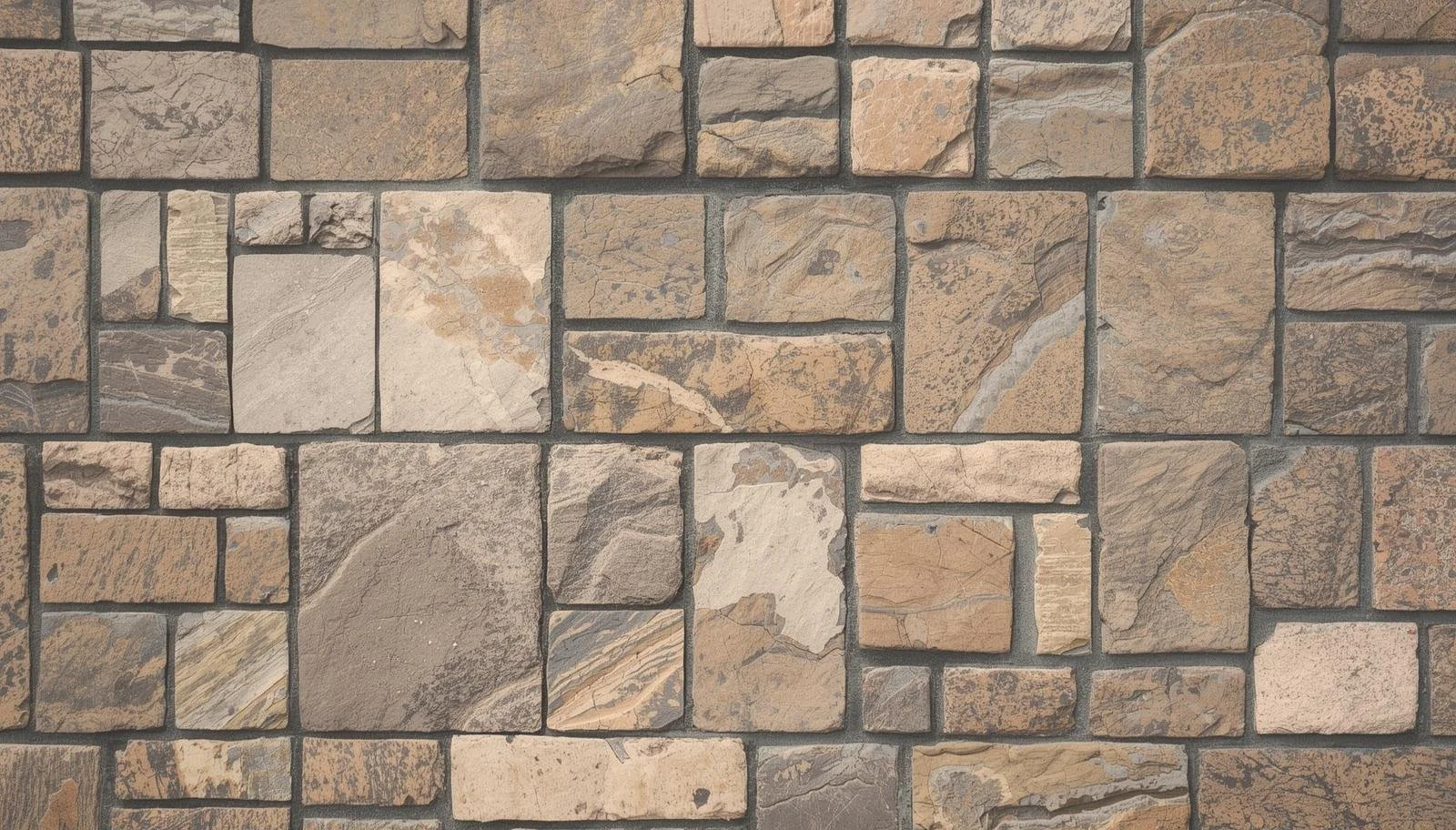
Simpler patterns take less labor and fewer stamps. Wood plank and custom inlays cost more because they require specialized stamps and more finish work.
How Long Island Weather Affects Stamped Concrete
The same freeze-thaw reality that affects driveways affects stamped patios, with two extra considerations:
· Sealer degrades faster under sun and salt. Plan on resealing every 2 to 3 years, not the 5 to 7 years some contractors suggest. South Shore patios need it more often than North Shore.
· Color fading. Acid stains hold color longer than surface applications. Integral color (mixed into the concrete itself) holds longest. A contractor pricing an integrally colored slab at the low end of the range is often using surface-applied color that fades within a few seasons.
· Freeze-thaw spalling risk. Stamped patios with thin slabs or poor air-entrainment flake on the surface after a few winters. Insist on 4+ inch thickness and an air-entrained mix.
· De-icer damage. Rock salt and calcium chloride eat stamped concrete. Use calcium magnesium acetate (CMA) or plain sand for ice management on a stamped patio.
Color and Sealing — the Recurring Costs
One line you won't find on the initial bid: resealing. Plan on:
· First reseal: year 2 or 3 after install, $2 to $3 per sq ft
· Subsequent reseals: every 2 to 4 years
A 400 sq ft patio costs $800 to $1,200 to reseal. Budget for it and remember that you always pay for what you get, cheaper prices wont include the right products.
What to Ask Before You Sign
Red flags on stamped concrete bids:
1. No mention of reinforcement. Unreinforced stamped patios crack sooner. Wire mesh is standard. If it's not in the bid, ask why.
2. Sealer "lifetime guarantee" language. Sealer does not last a lifetime. Any contractor claiming otherwise is overpromising.
3. "We'll match any pattern" without a portfolio. Ask to see three completed patios in the specific pattern you want. Photos on the contractor's phone are fine. You need to see what their actual work looks like.
4. Vague color specs. A real bid names the exact color code or color card. "Slate gray" can mean anything.
5. No mention of expansion joints. Stamped patios crack where joints should have been placed. Joints every 100 to 200 sq ft are standard.
6. Pouring below 40°F. Stamping in cold weather extends the set time and creates pattern issues. A rushed cold-weather stamp is worse than waiting for spring.
Estimator's Note
Estimator's note: I've bid stamped patio jobs in Garden City and Massapequa where the homeowner was comparing a $9,000 bid to a $13,000 bid on identical square footage. The cheaper bid had no reinforcement, a thinner slab, and cheaper sealer. Four years later, those are the patios being removed and replaced.
Permit Considerations
Most Long Island towns don't require a permit for a ground-level concrete patio under 200 square feet that isn't attached to the house. Above that, or if it is attached to the structure, you'll probably need:
· A building permit ($75 to $200) (if necessary)
· Sometimes a survey showing setback compliance
· Occasionally a variance if you're close to a property line
Rules vary between the Town of Brookhaven, Town of Islip, Town of Hempstead, and the incorporated villages. A good contractor checks and pulls the permit for you.
For a full breakdown of the permit process by town, see the guide on concrete driveway permits in Suffolk and Nassau County — the same logic applies to patios in most jurisdictions.
Timeline From Estimate to Usable Patio
A typical 400 sq ft stamped patio runs 4 to 7 weeks from first call:
· Week 1: Estimate and scope confirmation - Permit (if required) and design approval on pattern and color
· Week 2: Demo of existing surface, if any. Subgrade prep, forming, pour, and stamp
· Week 3: Curing and first sealer coat
· Week 4-6: Cure enough for regular use (7 days light foot traffic; 28 days for furniture and grills)
Who Should Hire the Contractor
The pattern and price both depend heavily on the crew doing the work. Stamping is as much craft as concrete. The same mix and same stamps in two different crews' hands produce very different results.
For how to evaluate a concrete contractor before you sign, see how to hire a good concrete contractor on Long Island.
The Bottom Line
A stamped concrete patio is one of the better residential concrete investments when it's installed right. The price depends almost entirely on pattern complexity, slab quality, and finish work. The tradeoff is the ongoing sealing. If you're not going to maintain it, plain concrete or pavers might suit you better.
For a free estimate written by a professional concrete estimator on your specific patio project, request one here.